

Application

How to apply for undergraduate admission to UFRJ

We’re glad you’re interested in applying to UFRJ and look forward to receiving your application for undergraduate admission. Here you will find all information you need to submit your application for undergraduation admissions.

To start an application the prospective students must send us an Application Form (Formulário de Candidatura), which is available on our website (PDF version). This form must be duly completed and sent right to Diretoria Adjunta de Relações Internacionais (DARI) along with your transcripts and others required documents.

Once our department receives your documents, we will analyze and process your application and send you a Letter of Acceptance so you can retrieve your visa at the Consulate of Brasil in your country. During this admission process we will get in touch with you to keep you informed about other admissions-related events and deadlines.

Please take a moment to read carefully the Application Forms in order to prevent any significant errors or omissions, causing delays in processing.

On your first day at UFRJ you must contact DARI in order to receive the information you need to enroll in UFRJ and follow the courses regularly.

You must bear in mind that you will have to keep us informed about your arrival date so we can give you directions and useful information about how to get to us. (contacts information at the end)

All required documents might be sent by your home Institution to incoming@poli.ufrj.br (only digital copy is required)

Documents required to apply to Escola Politécnica:

  • Application Form with personal information;
  • Letter of motivation explaining why the interested in coming to UFRJ;
  • Transcripts with courses already finished in the home Institution;
  • Approval of student mobility from the home Institution (signature and stamp on the Application Form);
  • ID-sized photo (digital file);
  • Portuguese Language Teste Score or equivalent document.


Important: The list below contains the courses offered in the current semester, but the Departments are still updating information and some disciplines will still be included.

Courses Offered in the Current Semester (August–December 2025)

CIVIL ENGINEERING
COMPUTER AND INFORMATION ENGINEERING
CONTROL AND AUTOMATION ENGINEERING
ELECTRICAL ENGINEERING
ELECTRONIC AND COMPUTER ENGINEERING
ENVIRONMENTAL ENGINEERING
INDUSTRIAL ENGINEERING
MATERIALS SCIENCE ENGINEERING
MECHANICAL ENGINEERING
METALLURGICAL ENGINEERING
NAVAL ENGINEERING
NUCLEAR ENGINEERING
PETROLEUM ENGINEERING

Potential Course Offerings – Next Semester (March-July 2026)

The links below are currently disabled as we are updating the information. Please refer to the list above, "Courses Offered in the Current Semester (August–December 2025)".
For additional details, you may consult the course curricula at:
https://poli.ufrj.br/foreign/courses-curriculum
Each course has a link to a brief description of its content."

Note: The courses listed below are potential offerings and are subject to change. The final list of courses to be offered in the March–July 2026 semester will be confirmed and communicated to students during the acceptance process.

CIVIL ENGINEERING
COMPUTER AND INFORMATION ENGINEERING
CONTROL AND AUTOMATION ENGINEERING
ELECTRICAL ENGINEERING
ELECTRONIC AND COMPUTER ENGINEERING
ENVIRONMENTAL ENGINEERING
INDUSTRIAL ENGINEERING
MATERIALS SCIENCE ENGINEERING
MECHANICAL ENGINEERING
METALLURGICAL ENGINEERING
NAVAL ENGINEERING
NUCLEAR ENGINEERING
PETROLEUM ENGINEERING

Once received the documents above, the students will receive a “Letter of acceptance” from Escola Politécnica of UFRJ to be presented to the Brazilian Consulate in order to get the visa.

Final deadline for submission of nominations:

-From August1st to OCTOBER 31th – students aiming at come to UFRJ in March of the following year (1st semester)
– From February 1st to APRIL 30th – students aiming at come to UFRJ in August of the same year (2nd semester)

Research Exchange – Supervisors and Laboratories

Adriana da Cunha Rocha

Laboratory: Laboratório de Ensaios Não Destrutivos, Corrosão e Soldagem – LNDC

Research area: – High-temperature oxidation, – High-entropy alloys, – X-ray diffraction, – Physical metallurgy

Celio Albano da Costa Neto

Laboratory: Laboratório de Processamento e Caracterização de Materiais – LPCM (POLI73)

Research area: – Mechanical behavior of composites and polymers (fracture, fatigue, creep, ESC, processing, etc.)

Fernando A. N. Castro Pinto

Laboratory: Laboratório de Acústica e Vibrações

Research area: – Experimental and operational modal analysis, – Dynamics of mechanical systems, – Acoustic materials

Gabriel Lisbôa Verissimo

Laboratory: Laboratório de Transmissão e Tecnologia do Calor (LTTC)

Research area: – Inverse problems, – Computational fluid dynamics (CFD), – Simulation and optimization of thermal systems, – Heat and mass transfer, – Air conditioning and refrigeration

George Victor Brigagão

Laboratory: Núcleo de Pesquisa em Sistemas e Gestão de Engenharia – GESTORE

Research area: – Low carbon engineering and management, – CCUS (Carbon Capture, Utilization, and Storage), – CO2 capture, storage, and utilization, – Bioenergy with carbon capture and storage (BECCS), – Chemical and biochemical biomass conversion, – Biorefineries, – Hydrogen technology, – Chemical conversion of CO2, – Process simulation and optimization, – Technical and economic project evaluation

Gustavo Rabello dos Anjos

Laboratory: Laboratório de Mecânica dos Fluidos e Aerodinâmica – LabMFA

Research area: – Fluid mechanics, – Computational heat and mass transfer, – Scientific computing, – Multiphase flows, – Flow in porous media, – Finite element method

Hector Kotik

Laboratory: Laboratório de Materiais Compósitos – LaCom

Research area: – Fatigue and fracture of laminated fiber-reinforced composites (carbon, glass, aramid, etc.) and fiber-metal laminates (Glare and Arall), – Experimental techniques for evaluating quasi-static mechanical properties in-plane and out-of-plane of laminates (2D and 3D), – Experimental techniques for evaluating interlaminar and translaminar fracture and fatigue properties

Hector Kotik

Laboratory: Laboratório de Mecânica da Fratura – LMF

Research area: – Experimental techniques for determining fracture toughness in metallic materials, – Effects of splits on fracture toughness, – Fracture characterization of multi-component and high-entropy alloys, – Measurement of fracture toughness and fatigue performance of metallic alloys exposed to aggressive environments

Jose Luis Lopes da Silveira

Laboratory: Centro de Estudos em Fabricação e Comando Numérico – CEFCON

Research area: – Manufacturing processes

Karen Johanna Quintana Cuellar

Laboratory: Sala do Futuro da Graduação em Engenharia de Produção

Research area: – Machining and micromachining, – Solid-state welding, – Friction stir manufacturing technique, – Analysis and modeling of forces and torque in manufacturing processes

Laís Ferreira Crispino Proença

Laboratory: Laboratory of Energy Management Technologies – LEMT (Antigo Laboratório de Eletrônica de Potência e Média Tensão)

Research area: – Study and implementation of offline and real-time simulators for power electronics converters for various applications, including:, – Integration of renewables, – Power supply for hydrogen production plants (electrolytic), – Machine drives, – Mobility applications

Marcelo Gomes Miguez

Laboratory: Laboratório Água & Cidade – LAC

Research area: – Urban drainage, – Flood control, – Flood risk management and urban flood resilience

Mayara Amario

Laboratory: Núcleo de Ensino e Pesquisa em Materiais e Tecnologias de Baixo Impacto Ambiental na Construção Sustentável – NUMATS

Research area: – Sustainable materials for civil construction

Natanael Nunes de Moura Junior

Laboratory: Laboratório de Processamento de Sinais – LPS

Research area: – Artificial intelligence, – Signal processing, – Data science, – Data engineering, – Data visualization

Roberto Ivo da Rocha Lima Filho

Laboratory: Research in Interdisciplinary Industrial Organization – RioGroup

Research area: – Engineering economics, – Sustainability, – Energy economics, – Econometrics, – Behavioral economics

Silvia Corbani

Laboratory: Laboratório de Acústica e Vibrações

Research area: – Fracture mechanics, – Fatigue, – Structural mechanics

Su Jian

Laboratory: Laboratório de Simulação e Metodos em Engenharia – LASME

Research area: – Nuclear systems, – Numerical and hybrid methods in engineering

Ulisses Admar Barbosa Vicente Monteiro

Laboratory: Laboratório de Ensaios Dinâmicos e Análise de Vibração – LEDAV

Research area: – Failure prediction in reciprocating machines and turbomachinery using artificial intelligence

Information under preparation
We are currently updating the list of supervisors.
More laboratories and supervisors will soon be available to host international students for research internships.
Please check back later for updates on the research opportunities offered by the Polytechnic School.

Courses / Curriculum

All the courses offered by the Polytechnical School of Universidade Federal do Rio de Janeiro are considered references in their areas of performance, therefore they integrate theoretical quality and practical experience in diverse levels: undergraduate, graduate and extension.

Civil Engineering
Computer and Information Engineering
Control and Automation-Engineering
Electrical Engineering
Electronic and Computer Engineering
Environmental Engineering
Industrial-Engineering
Materials Science Engineering
Mechanical Engineering
Metallurgical Engineering
Naval Engineering
Nuclear Engineering
Petroleum Engineering

Interpoli

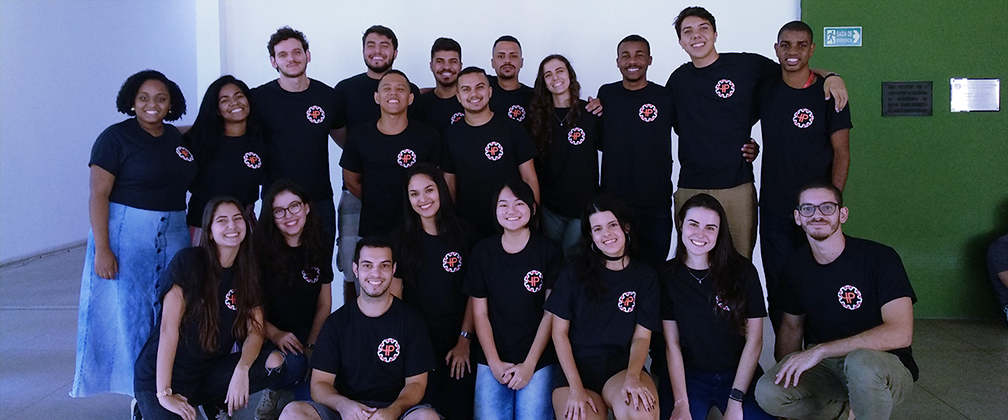
Interpoli is a Student Association from the Polytechnic School, School of Chemistry and COPPE at UFRJ that seeks to improve the experience of foreign students who start studying at the Technology Center (CT), through academic exchange programs and aims to build a positive image of UFRJ abroad. Interpoli supports the International Office of Pcholytenic School (DARI-Poli) in welcoming students and integrating them into the Brazilian university environment and the city of Rio de Janeiro. The association also offers a student mentorship program, pairing foreign students with local peers to help them adapt, and provides support in finding rental housing.


interpoli@poli.ufrj.br